When you're clearing a house, finishing a renovation, or sorting out a garden that's got away from you, things eventually need to go somewhere. Most of the time the practical options come down to two: hire a skip, or put things in storage.
They're solving different problems. Picking the wrong one will cost you either money, regret, or both.
What each option is actually for
A skip is for permanent disposal. Rubble, broken furniture, old appliances with no life left, garden waste, anything that's genuinely at the end of its usefulness. Once it's in the skip, it's gone.
A storage unit is for things you're not ready to part with, or things you need to move temporarily while something else happens. Items with practical, financial, or sentimental value that you want to keep, but not necessarily at home right now.
The most common mistake is using a skip as the default for everything, and then realising two weeks later that something that went in it was actually worth keeping, selling, or giving to a family member.
A direct comparison
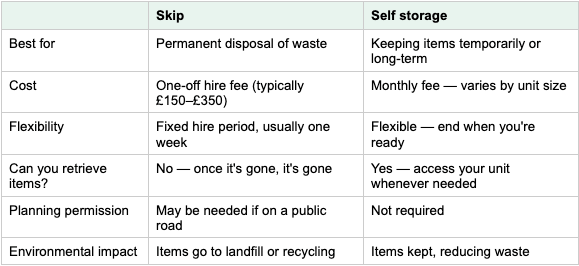
When a skip is the right choice
- You have genuine building waste - plasterboard, tiles, rubble, old timber
- You're clearing a property of things that are broken, mouldy, or beyond further use
- You've already sorted what you're keeping and just need the waste removed
- You're working to a tight deadline and need a simple one-off solution
When a storage unit is the right choice
- You're moving house and need somewhere for belongings while waiting on completion
- You're renovating and want to protect furniture and contents during the work
- You're downsizing and need time to make decisions about what to keep
- You have seasonal items - garden furniture, sports equipment, Christmas decorations - you want accessible but not at home
- The items have resale value you'd rather realise than lose
Can you use both?
Yes — and for any serious clear-out, that's often the right approach. Sort first: genuine waste goes in the skip; anything with value or needing a decision goes into storage or to one side. Trying to decide the fate of everything while a skip is sitting on the driveway at cost per day is how good things end up in the wrong place.
The environmental point
A skip is not automatically wasteful - reputable hire companies do sort loads for recycling. But items that go into a skip are, at best, being broken down and processed rather than reused. Keeping usable things in storage - and eventually selling, donating, or returning them to use - is the better environmental outcome for anything with life left in it.
The honest verdict
Genuine waste and broken items with no further use: hire a skip.
Items with practical, sentimental, or financial value, where you need space cleared while keeping options open: storage.
Major clear-out with both types of material: use both.
